









 Kandarp
Table of contents(7)
Short on Time? Get the Key Points
Prompt copied. Paste it into Gemini's message box to get the summary.
How Oil Brands Evolve When Tradition Meets Structure
What happens when a brand that people deeply trust starts growing faster than its systems?
This is not a hypothetical situation. It is a lived reality for many traditional oil businesses across India. For years, these brands operate within a close-knit ecosystem. The founder knows the farmer. The retailer knows the founder. The customer knows the taste. So, the product succeeds not because its promoted, but people believe in it.
Growth begins quietly.
A few more retailers start stocking the oil. Orders increase during festive seasons. A nearby city begins showing demand. Gradually, the business expands beyond its original geography. The pride is visible. The demand is real.
And then complexity enters.
The same informal processes that once supported the business begin to feel stretched. Phone calls increase. Delivery planning becomes chaotic. Inventory decisions become reactive. Keeping track of finances becomes messy and nothing adds up easily. The founder ends up spending more time untangling daily operational issues than thinking about the bigger picture.
The oil remains pure. The values remain intact. But the structure begins to lag behind ambition.
This is the inflection point. The moment where a business decides whether it will remain local in scale or evolve deliberately.
Over the past few years, we walked beside three oil brands that reached the same challenging crossroads. Each carried its own story, its own heritage, and its own level of maturity. Their authenticity was undeniable. Yet all three needed one thing to move forward, that is, ‘clarity and alignment to fuel traditional oil brands growth in a fast-shifting market’.
Their journeys reveal something fundamental: tradition builds identity, but structure builds stability.
The Invisible Strain Behind Expansion
Traditional oil businesses often grow through familiarity rather than formal systems. Orders are noted manually. Dispatch is coordinated through conversations. Stock levels are estimated based on memory and experience. Cash flow is tracked through notebooks or spreadsheets maintained internally.
At a smaller scale, this approach feels personal and manageable.
However, as demand increases, operational strain becomes more visible. It begins subtly.
A retailer calls asking about delayed stock. A delivery vehicle is sent twice to the same location due to miscommunication. Production runs short because forecasted demand did not match actual orders. Cash reconciliation takes longer at the end of the week. The founder starts working longer hours, not because growth is failing, but because growth is overwhelming.
Some of the most common structural friction points include:
- Orders arriving from multiple locations without centralized visibility.
- Lack of clarity between confirmed demand and available stock.
- Manual delivery route allocation leading to inefficiency.
- Inconsistent branding across physical retail spaces.
- Limited digital presence despite expanding geography.
Without organized supply chain management, these issues compound over time. The business remains profitable, but it becomes harder to control. Scaling begins to feel risky.
Expansion without a strong structure beneath it is always at risk of collapsing.
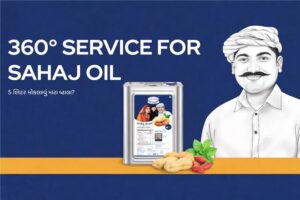
Sahaj Oil: From Rising Demand to Organized Growth
Sahaj Oil’s journey shows how powerful the emotional connection can be, sometimes even outpacing what any brand plans for.
When the lockdown shifted life indoors, families began looking closely at what they brought into their kitchens. Cold-pressed, chemical‑free groundnut oil felt like a safe embrace, something pure, familiar, and trustworthy. Sahaj tapped into that emotion naturally. Its positioning didn’t just speak to people; it reassured them.
As trust deepened, orders began to surge. And in a surprisingly short span of time, the brand found itself reaching homes across more than 80 cities, carried forward not just by demand, but by belief.
Externally, this expansion was celebrated. Internally, operational strain intensified.
Before structural intervention, Sahaj faced several practical challenges:
- Orders were coming in through multiple channels without a unified tracking system.
- There was no clear visibility into which vehicle would deliver to which region on a given day.
- Production planning relied on past averages rather than real-time demand patterns.
- Inventory allocation across outlets depended heavily on manual coordination.
- Cash reconciliation required extensive follow-ups due to fragmented records.
These were not failures of intention. They were natural consequences of rapid expansion without systems.
The first step was to introduce operational clarity before pushing further outward growth.
A CRM framework was implemented to centralize every incoming order. Each request was logged digitally, creating real-time visibility into demand volume and timelines. Production planning began aligning with confirmed orders rather than estimation. Inventory distribution across cities was tracked and optimized through data insights. Delivery routes were mapped digitally to reduce inefficiency. Financial records were streamlined to minimize mismatches.
This shift established a foundation for organized online supply chain management. It introduced predictability where uncertainty once existed.
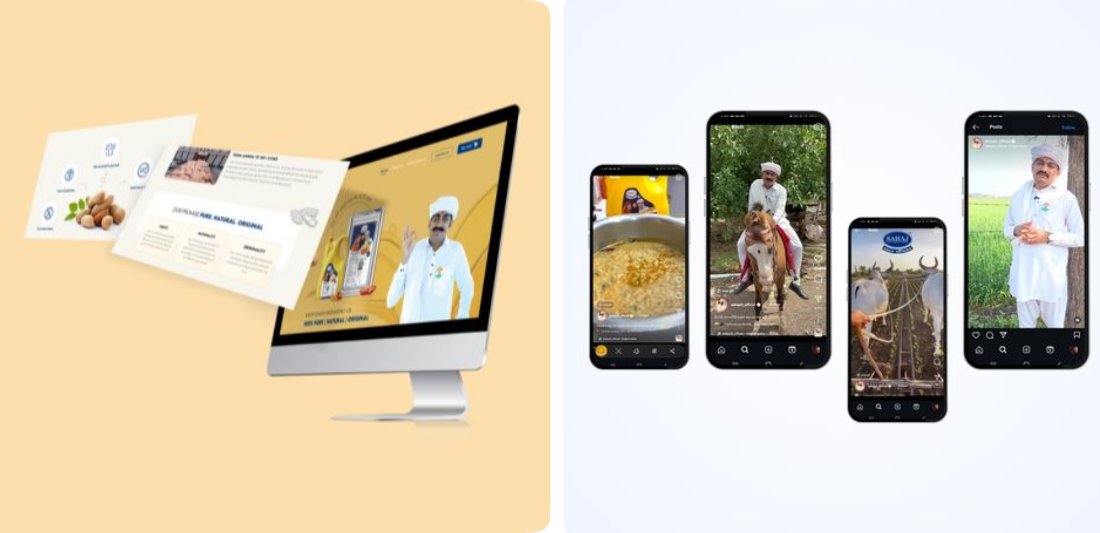
The video shoot captured Sahaj’s story with honesty and simplicity. Instead of dramatizing, it focused on the real process. Instead of staging performances, it highlighted genuine authenticity.
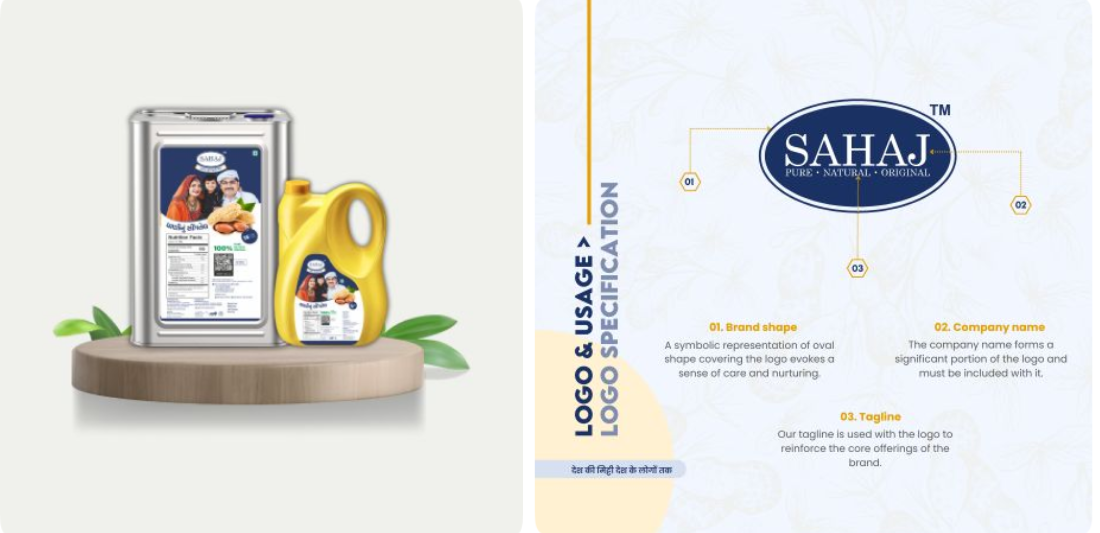
On social media, the communication stayed rooted in trust and purity, consistent, steady, and intentional, not driven by trends. The website was shaped to feel clear and easy to navigate. And the refreshed packaging ensured the product stood out on the shelf in a way that matched its positioning.
The transformation did not alter Sahaj’s identity. It strengthened it.
With structured systems in place, Sahaj’s team could plan production cycles more accurately. Delivery timelines improved. Customer follow-ups decreased. Internal coordination became smoother. Growth became intentional rather than reactive.
That is how thoughtful business transformation supports expansion without disrupting roots.
Desi Ghani: Strengthening Recognition Before Expansion
Desi Ghani approached growth from a slightly different perspective. The product quality and traditional process were intact. However, the brand articulation required clarity.
In retail spaces, oil brands compete visually and emotionally. Shelves are crowded. Decisions are quick. Packaging must communicate clearly within seconds.
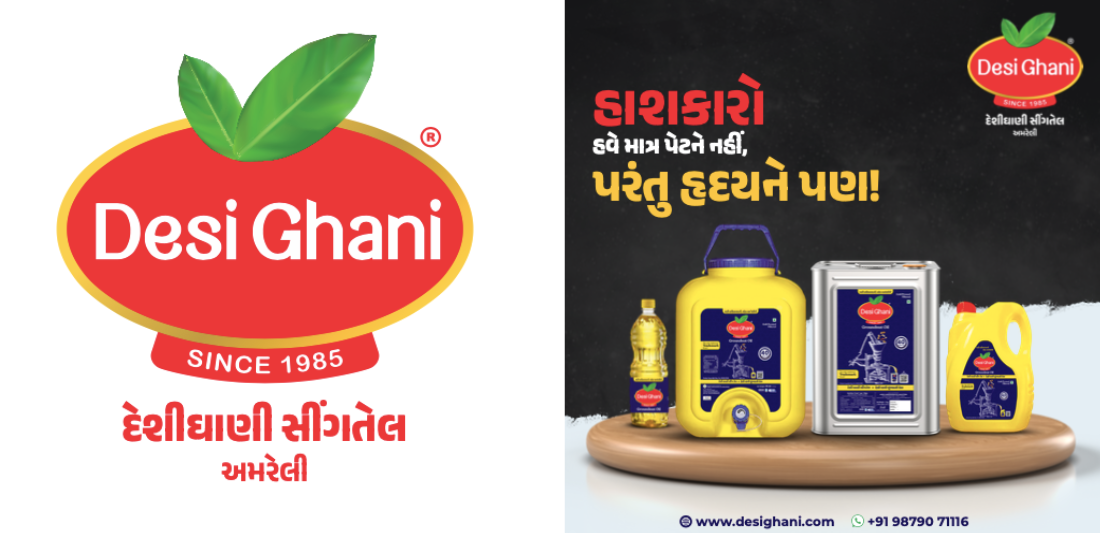
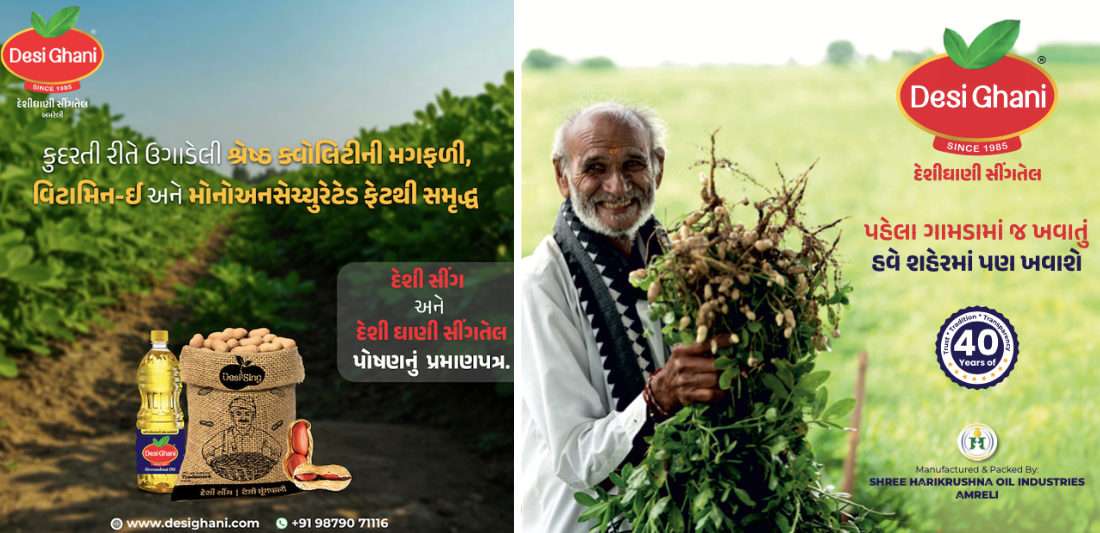
The first phase focused on identity consolidation. The logo was refined to reflect heritage while ensuring clarity across formats. Packaging design introduced structured hierarchy, allowing product name, benefits and origin cues to stand out distinctly. The visual refinement, evident in accompanying images, reflects balance rather than embellishment.
Packaging redesign for oil brands is not cosmetic. It influences perception and recall.
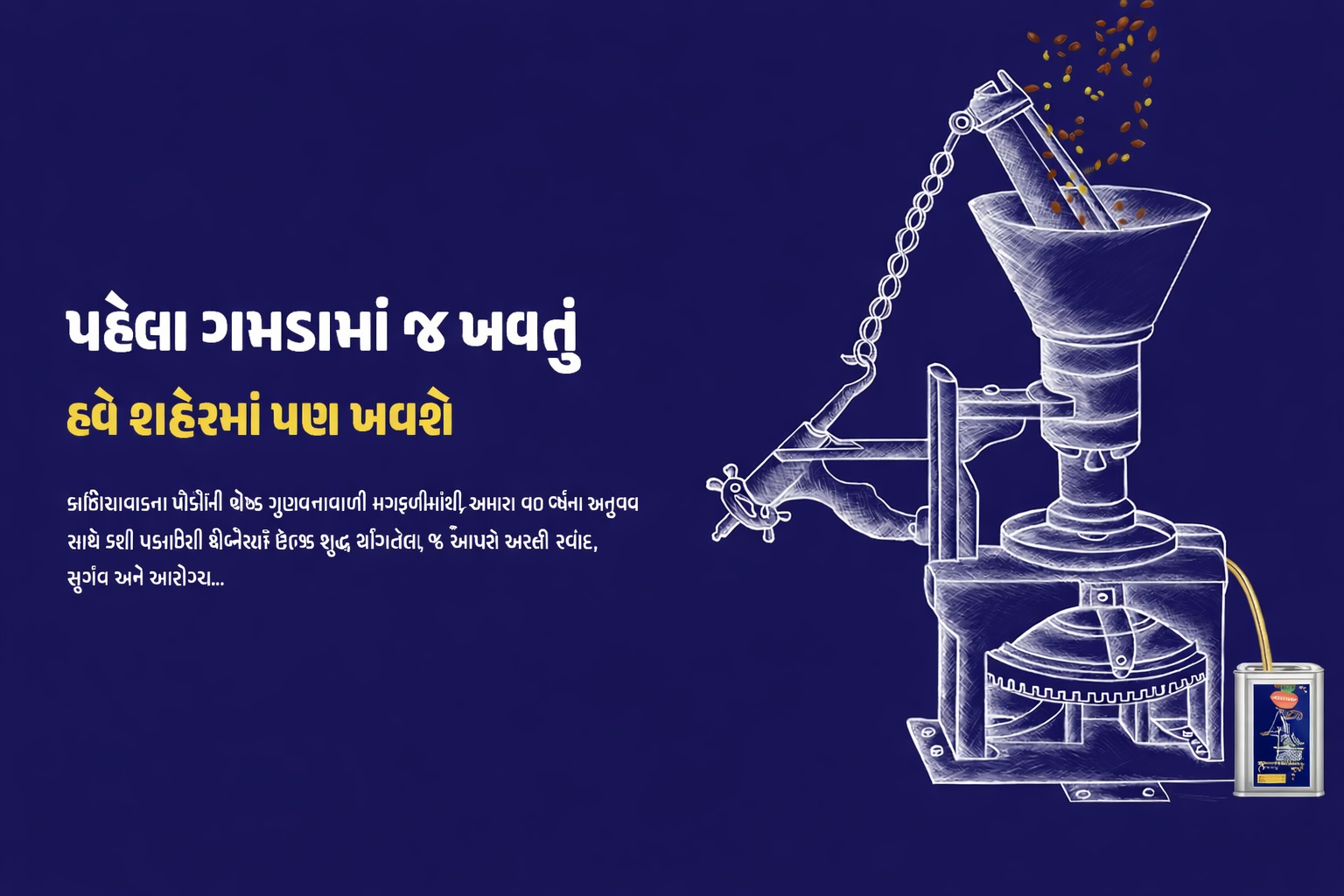
Beyond packaging, digital infrastructure strengthened credibility. The website centralized product information and sourcing transparency. A professionally crafted video translated the brand’s narrative into a human story. Social media management maintained consistency in messaging. A WhatsApp chatbot simplified communication between brand and customer.
These interventions supported a cohesive business development strategy. Recognition became clearer. Customers could identify the brand instantly. Retailers experienced improved confidence in shelf presentation.
Recognition reduces friction. Friction often slows scaling a business more than competition does.
Desi Ghani’s evolution demonstrates that clarity in communication strengthens expansion readiness.
VI Oil: Building an Integrated Ecosystem for Sustainable Growth
VI Oil required a more comprehensive alignment across visible and operational layers.
The objective extended beyond refining identity. It involved synchronizing retail presence, digital communication and backend systems.
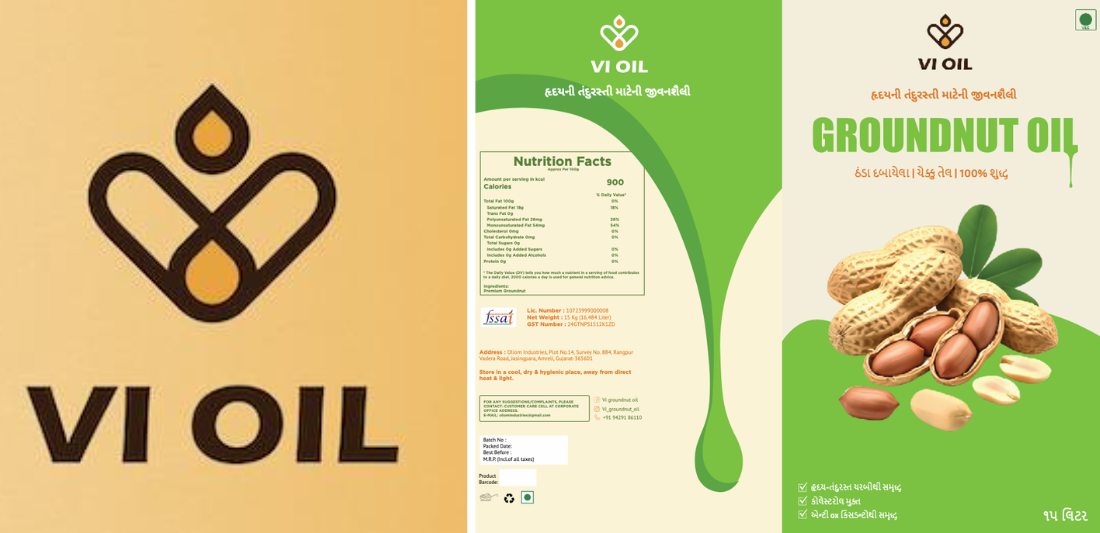
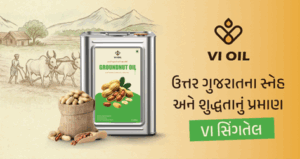
Logo development established clarity. Packaging design ensured consistent shelf recognition. Retail branding through shop banners, van branding and standees strengthened physical visibility. Store opening materials reinforced professionalism in expanding markets.
These physical touchpoints were supported by digital infrastructure. The website provided structured information. Script development and video editing translated brand values into narrative content. Social media maintained engagement beyond physical outlets. The WhatsApp chatbot improved accessibility.
Behind these visible assets, CRM integration introduced structured order tracking. Inventory planning became data supported. Delivery coordination improved. Forecasting accuracy increased.
This integrated ecosystem strengthened VI Oil’s overall business growth strategy. Growth became cohesive rather than fragmented.
When retail branding, digital platforms, and backend systems finally began working together, everything started to feel smoother. What once felt scattered now moved in one direction. Growth didn’t look overwhelming anymore, it looked possible. And for the customer, every interaction felt the same, no matter where they met the brand.
The Discipline That Shapes the Journey
Across these three journeys, a consistent pattern emerged.
Authenticity alone cannot support scale indefinitely. Growth requires operational discipline, communication clarity and system alignment.
Sustainable expansion for traditional oil brands depends on several interconnected principles:
- Operational systems must evolve alongside distribution growth.
- Packaging must communicate value instantly and clearly.
- Digital platforms should enhance transparency and accessibility.
- Backend processes must reduce dependence on manual coordination.
- Retail presence must remain visually consistent across locations.
When these elements align, small business growth becomes stable rather than overwhelming.
Structure does not overshadow tradition. It protects what matter the most.
From Gaam to Growth: What Truly Endures
When a traditional oil brand begins to expand, the biggest risk is not competition. It is an imbalance. Growth that moves faster than structure eventually creates strain. Not immediately. Not visibly. But gradually.
The founders who build these businesses rarely start with the intention of creating a “brand.” They start with the intention of making a good product. They focus on purity. They focus on consistency. They focus on trust.
But trust, when it begins to travel across cities, needs reinforcement.
Structure does not replace tradition. It gives it stamina. It ensures that the same oil that was trusted in one town can be delivered reliably to another. It ensures that as distribution widens, identity does not blur. It ensures that growth feels controlled rather than chaotic.
Across Sahaj Oil, Desi Ghani and VI Oil, the lesson was consistent. Expansion becomes sustainable only when clarity supports ambition. Systems must evolve alongside scale. Communication must align with operations. Identity must remain steady even as geography changes.
The journey from gaam to growth is not about becoming bigger. It is about becoming stronger.
When roots remain intact and structure grows around them, traditional businesses do not lose themselves in expansion. They carry their soil with them.
And that is what allows growth to last.
 Chat
Chat