









 Kandarp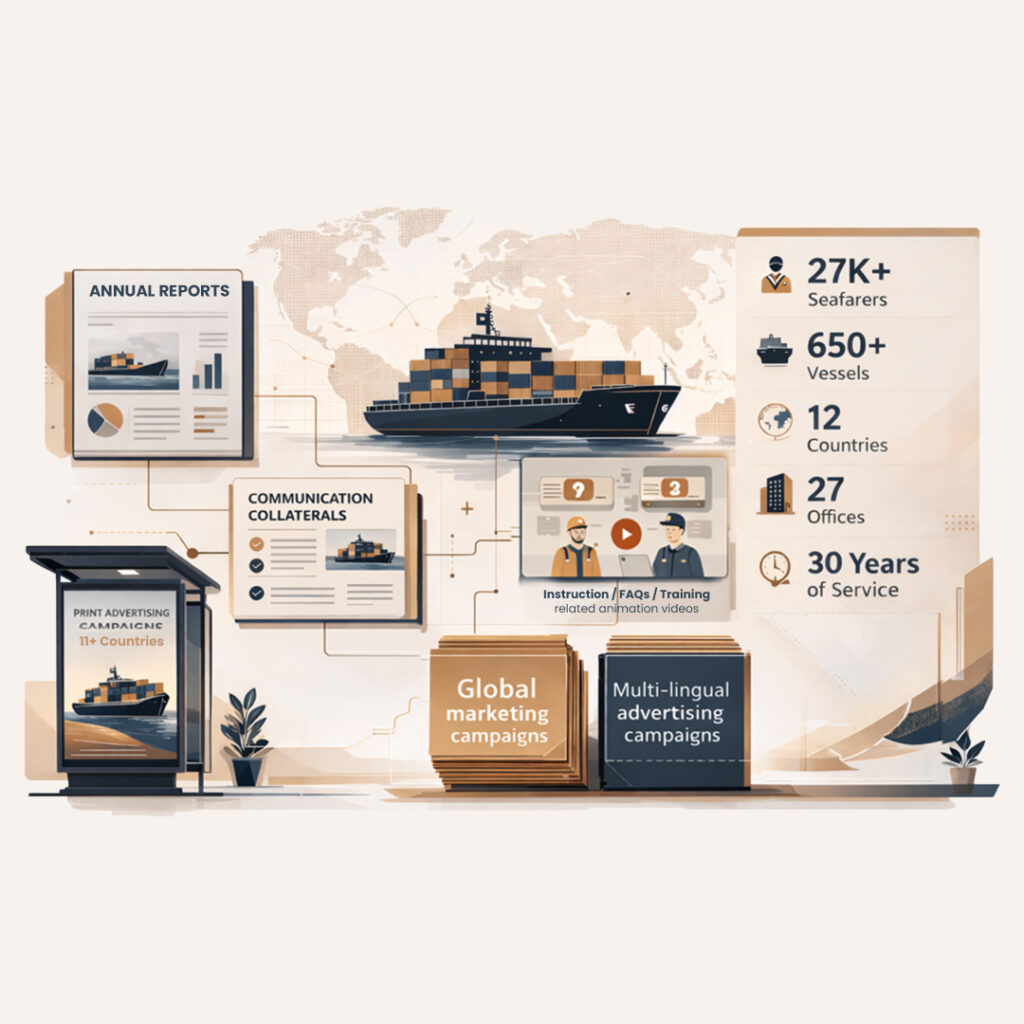
Table of contents(16)
Short on Time? Get the Key Points
Prompt copied. Paste it into Gemini's message box to get the summary.
Ships travel across oceans. Supply chains connect continents. Logistics partners operate with precision. But if branding and communication are not aligned with that scale, growth starts feeling uneven. That’s the gap we stepped into.
Shipping is not just a movement. It is coordination. Coordination between vessels, ports, global partners and operational teams. Everything runs on the system. Timelines matter. Accuracy matters. Communication matters.
And when communication is not structured, even strong operations begin to feel fragmented.
Entering the Maritime Industry
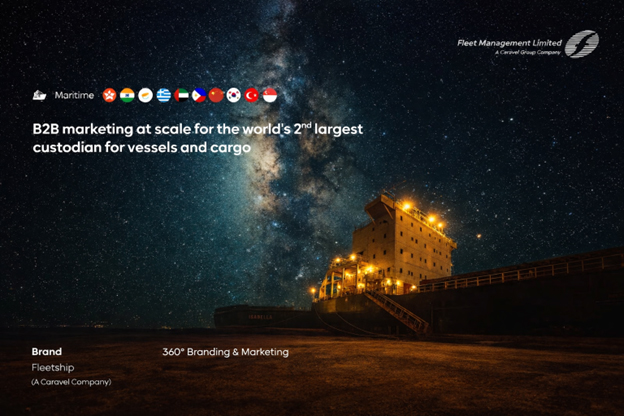
When we began working with Fleetship, it was our first deep engagement in the maritime and ship management sector.
Shipping logistics and supply chain communication were completely new territories for us.
There was no assumption of expertise.
The first step was understanding:
- How ship management companies operate daily.
- How communication flows between partners and stakeholders.
- How documentation standards are maintained.
- How brand visibility works in ports and vessels.
- What kind of materials are essential for global coordination.
Maritime branding is different. It is not expressive for the sake of visibility. It is disciplined, structured and functional.
That understanding shaped everything that followed.
Here’s a look at how we aligned fleet operations with structured branding execution:
What this reflects, represents systemized brand alignment built to match operational scale.
The Objective
Fleetship had always believed in strong communication. With a global network of channel partners, associates, employees and B2B stakeholders, streamlined engagement was essential.
The objective was clear:
- Elevate and streamline communication channels.
- Deliver a suite of tailored communication materials.
- Maintain transparency and reflect operational excellence.
- Ensure quality and accuracy across all deliverables.
This was about strengthening communication infrastructure.
The Challenges We Faced
Working in the maritime industry brought real challenges:
1. Industry Familiarity
Shipping has its own language, processes and hierarchy. Understanding ship management structures, documentation flow and compliance sensitivity required research and coordination.
2. Global Coordination
Fleetship operated across a wide network. Aligning communication across partners and stakeholders in different locations required structured timelines and clear approval processes.
3. Maintaining Accuracy
Annual reports and bulletins in this industry are not casual publications. They require precision, verified data and high-quality presentation.
4. Scale of Branding Execution
The branding canvas was diverse.
At one end, we worked on small-scale print applications and technical labeling.
At the other, we handled large-format bus shelter print designs and high-visibility creatives.
The scale difference demanded flexibility and technical adaptation.
Curious to see the complete execution?
Building Structured Communication Tools
The focus was not only design execution but process alignment.
To streamline communication, we worked on:
- Annual reports designed with structured layouts and clear data hierarchy.
- Newsletters formatted for readability and consistency.
- Bulletins that maintained clarity and accuracy.
- Bus shelter print designs that strengthened brand presence.
- Digital creatives aligned with global positioning.
Each material had to reflect professionalism and reliability.
Standardized templates ensured consistency.
Defined layout grids improved readability.
Clear approval of workflows reduced delays.
The aim was to create a communication system that could be sustained long term.
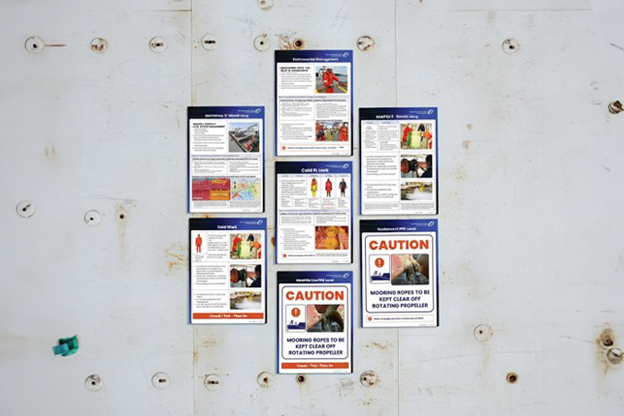
Our engagement also included the development of comprehensive annual reports aligned with fleet operations and corporate positioning.
Explore a sample of the communication materials designed as part of the Fleetship project.
Learning to Design for Ships
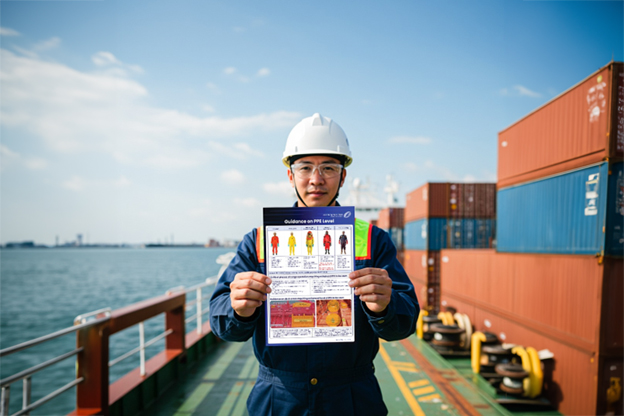
One of the most technically different aspects was ship-related branding applications.
Unlike conventional print or outdoor media, vessel branding requires consideration of:
- Surface material compatibility.
- Environmental durability.
- Long-distance legibility.
- Structural placement on curved surfaces.
Even small sticker applications demanded accuracy.
Large-format branding required understanding visibility from distance and proportion against vessel scale.
It was a new experience but it expanded our design perspective.
Beyond Print… Strengthening Visual Communication
Communication in shipping is continuous. It cannot rely on static documents alone.
To support broader engagement, we also developed:
- Corporate videos that presented Fleetship’s positioning clearly.
- Training videos to simplify complex operational processes.
- Animated videos to enhance understanding and engagement.
- Digital creatives for structured outreach.
Video content played an important role. In industries like shipping, clarity in training and communication directly supports operational efficiency.
The goal was not entertainment. It was simplification and reinforcement.
What Changed?
The outcome was not dramatic rebranding. It was structured enhancement.
Communication processes became more synchronized.
Deliverables maintained higher consistency.
Stakeholder materials reflected global standards.
Information dissemination became smoother.
Fleetship’s communication tools began aligning more closely with their operational discipline.
And in the shipping industry, discipline is credibility.
Why Structured Branding Matters in Shipping
Shipping, logistics and supply chain industries operate on trust and coordination.
When branding and communication lack structure:
- Stakeholder engagement weakens.
- Documentation becomes inconsistent.
- Brand perception feels fragmented.
When structured systems are in place:
- Communication aligns with operations.
- Information flows efficiently.
- Visual consistency reinforces reliability.
- Growth becomes manageable.
Branding is not separate from logistics. It supports it.
From New Industry to Structured Support
Entering maritime for the first time required adaptation. It meant learning terminology, understanding ship management systems and respecting operational discipline.
From small print applications to large bus shelter creatives. From annual reports to animated training modules.
The scale varied, but the objective remained consistent that provided constant, structured branding support.
Shipping companies move cargo across oceans. Their communication must move with equal clarity.
When operations and branding align, growth does not feel uneven.
It feels supported.
When Operations Scale, Communication Must Scale Too
Fleetship did not need reinvention. They needed refinement.
Strong shipping companies already have operational discipline. What they require is branding that reflects that same discipline across reports, creatives, videos and every stakeholder touchpoint.
In shipping, perception is built quietly.
Through consistency.
Through clarity.
Through structure.
When communication systems are aligned with logistics and supply chain operations, growth feels supported not stretched.
Ships move with precision. Their branding should be too.
If your fleet is expanding across ports and partners, your communication deserves the same level of coordination.
As maritime networks grow more complex, clarity becomes more valuable.
If you are looking to align your branding with the scale of your logistics and supply chain operations, let’s start that conversation.
 Chat
Chat